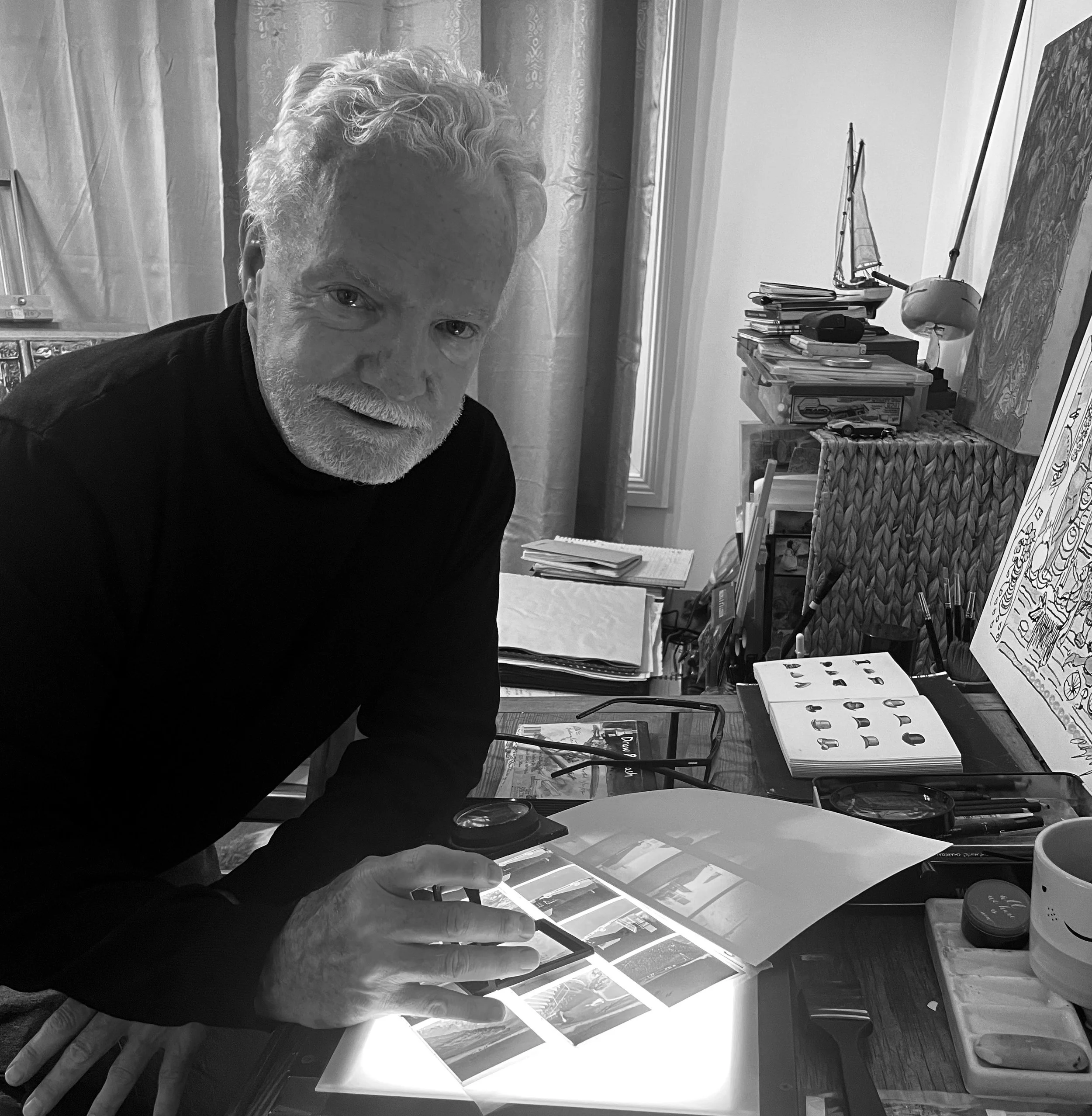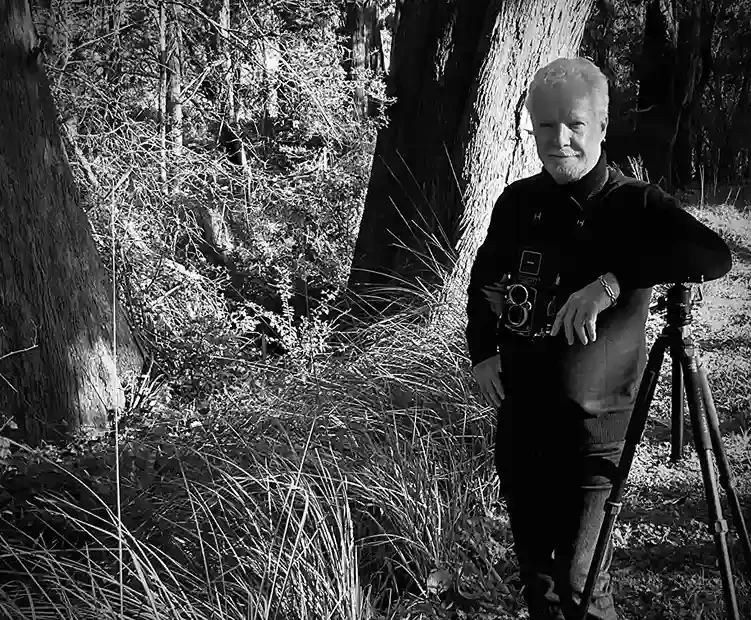
Robert Billington Photographer & Visual Artist
Fine art photography and artistic expression, for me are more than means of documentation. They are ways of seeing and connecting through contemporary photography and modern art photography.
Robert Billington is an award-winning Australian fine art photographer whose work explores place, mood, and the quiet narratives embedded in landscape and everyday life.
Born in England, Robert spent much of his childhood travelling between England and Australia, shaped by a life lived across continents. With an English doctor as a father and a Scottish nurse as a mother, neither country was ever fully relinquished. By the age of twelve, they had lived on both sides of the world and attended seven different schools—an experience that instilled adaptability and a heightened sensitivity to environment, culture, and belonging.
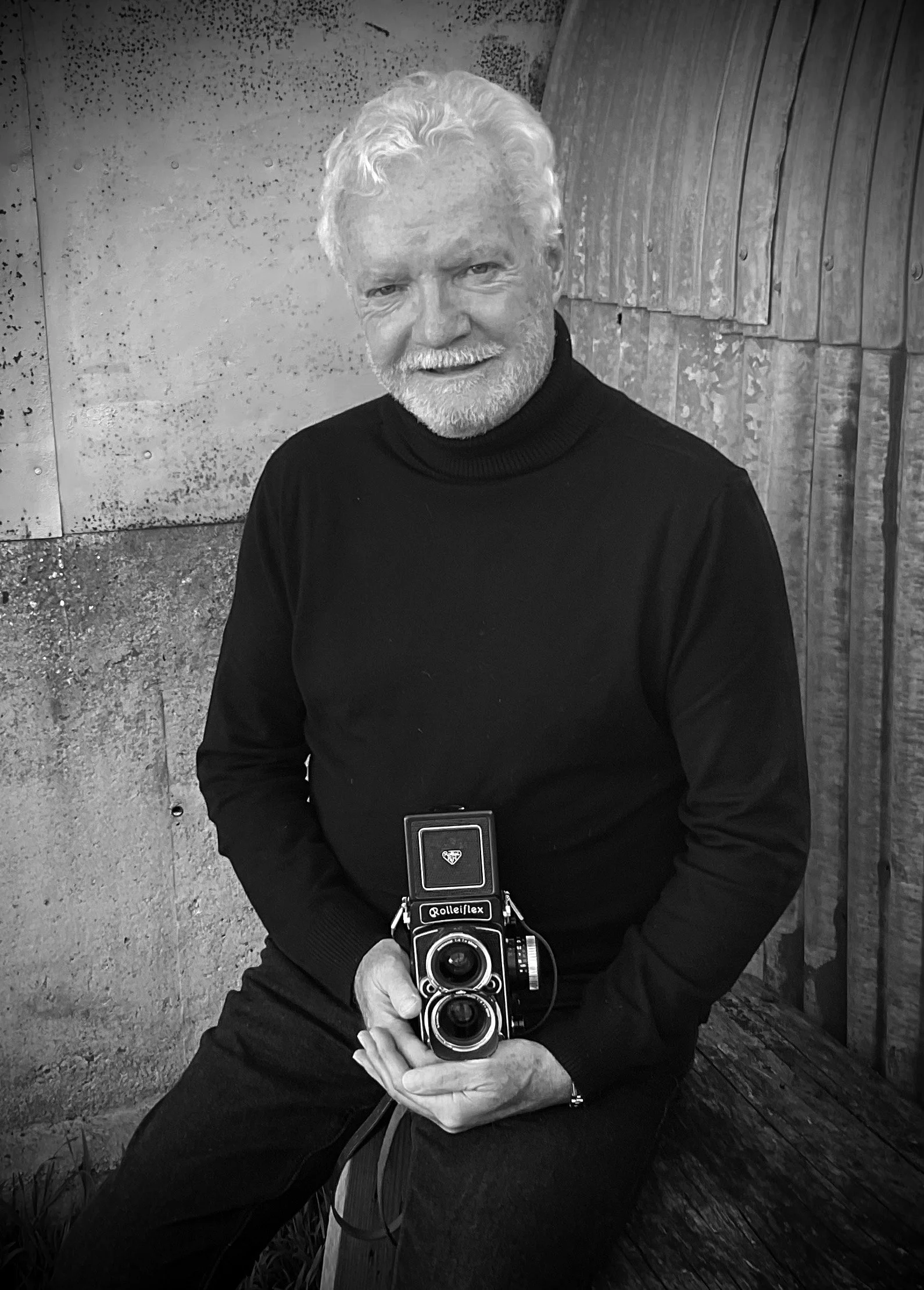
Australia ultimately became home. The day after his eighteenth birthday, Robert arrived in Sydney on a one-way ticket, marking the beginning of a lifelong artistic journey. At twenty, a chance discovery of the book Vanishing Africa by Mirella Ricciardi in a Sydney bookshop proved pivotal. Deeply influenced by the work, he purchased his first serious camera, a Nikon F2, soon followed by a Rolleiflex medium-format camera.
The Rolleiflex’s waist-level viewfinder fundamentally altered Robert’s approach to photography. The slower, more contemplative process encouraged distance from direct eye contact and fostered the creation of intimate, unguarded images. Working predominantly in black and white, his photography began to focus on atmosphere, abstraction, and the relationship between mood and place. This philosophy aligns with David Hockney’s concept of avoiding “eyeballing,” an idea that continues to inform his fine art practice.
This evolution marked a decisive transition from portraiture to fine art photography, leading to a distinctive visual language centred on mood-driven imagery and abstract landscapes. This body of work earned international recognition, including the prestigious Hasselblad Masters Award, and established Robert Billington as a leading contemporary Australian photographer.
By his mid-twenties, Robert was working professionally, specialising in environmental portrait photography. At the height of this period, he photographed up to twenty portrait sittings per week, capturing families, professionals, and politicians with a style that seamlessly integrated subject, setting, and emotional context.
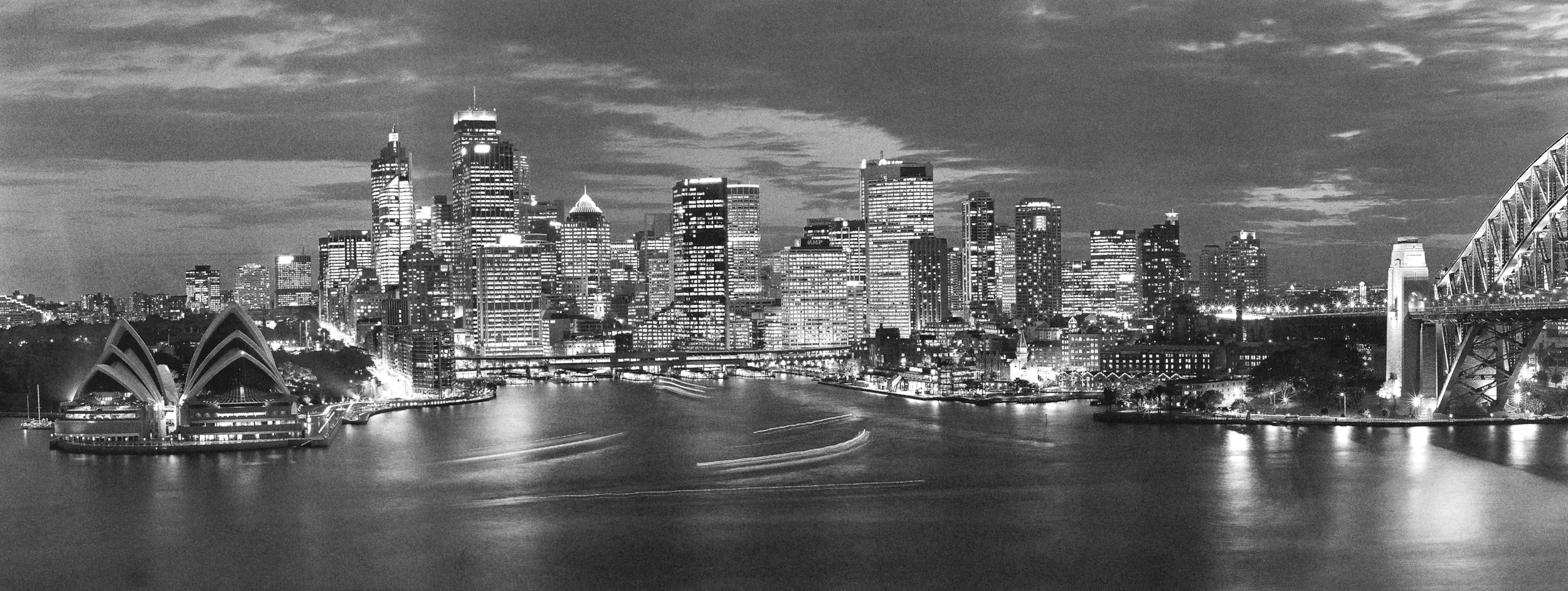
In the 1990s, Robert published his first photography book, Rustic Paradise, featuring a foreword by Max Dupain, who described it as “a classic.” The book documented the understated beauty of semi-rural Australia and cemented their reputation as a documentary storyteller. Since then, Robert has published nine photography books, including Balmoral, Every Man and His Dog, The Bridge, Australianimal, This Is Australia, Billington’s Sydney, and Bondi – The Sound of Tumbling Waves.
Today, Robert’s work is celebrated for its timeless quality, museum-grade craftsmanship, and contribution to Australian fine art photography, with images held in private and public collections and exhibited nationally and internationally.
Exhibitions of work
My work as an internationally exhibited photographer has been shown at leading Australian institutions, including the Art Gallery of New South Wales (making me an Australian National Gallery artist), the Queensland Art Gallery, and the Museum of Sydney, which hosted two solo exhibitions in 2000 and 2001. Internationally, I've exhibited in New York, London, across Europe, and as part of the M.I.L.K. collection photographer global exhibition. In 2005, I was honoured to represent Sydney as the featured artist on the French television series Thalassa.
Award & Recognition highlights include being named AIPP Photographer of the Year, receiving the Hasselblad Masters Award twice one of the highest honors in contemporary photography and earning fellowships from both the Royal Photographic Society (UK) and the British Institute of Professional Photography. These accolades recognize my contribution to art photography for sale and collector photography that bridges documentary realism with artistic expression.
Shifting Focus from Photography to Painting
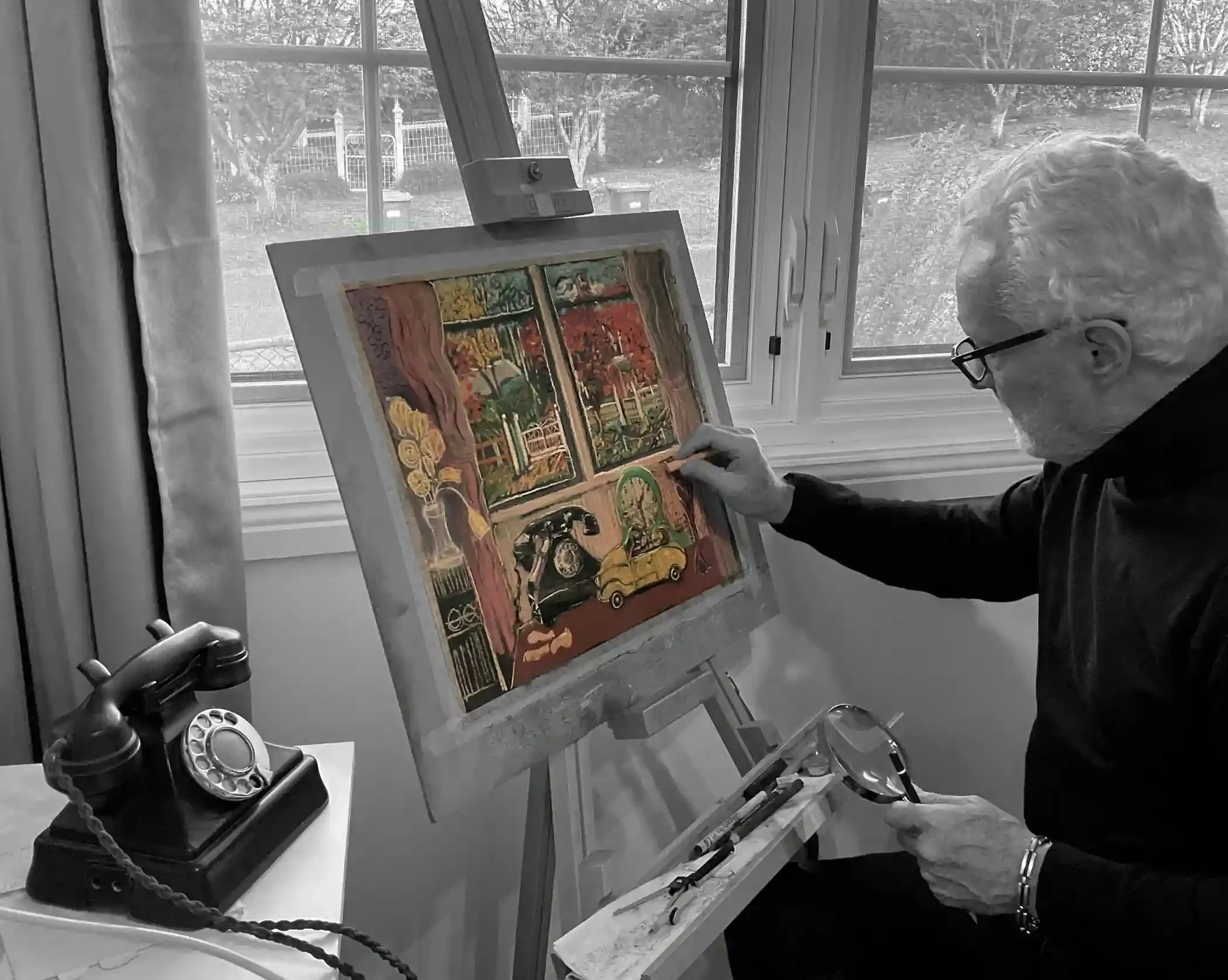
Today, my creative practice extends beyond the frame of the camera. In recent years, I’ve embraced painting as a parallel form of expression not to replace photography, but to expand it. In my studio in Burrawang, in the Southern Highlands of New South Wales, I now work across both mediums.
My paintings are shaped by the same themes I've long explored through fine art photography: nostalgia, atmosphere, and the quiet drama of ordinary places. This creative freedom in photography and painting allows me to explore mood-driven photography and abstract photography across multiple mediums.
I’m no longer just capturing what I see I’m chasing how it feels.
Whether in black and white or colour, on canvas or film, my work is ultimately about connection to place, to people, and to memory.